Becoming Ourselves: Broken Pieces
Shaped by Those Before Us
It feels like the harder you try to hold on to something, the more it slips through your fingers, leaving you picking up the broken pieces instead of enjoying what you’ve built. It’s a truth that only makes sense when you’ve lived through it. Parents always say their kids will understand one day that they’ll sit in the same seat, echoing the same words. But as a kid, that’s impossible to believe—it all sounds like bullshit. You tell yourself you’ll never say those things, only to laugh at yourself years later, caught in the same conversation, telling your own child they’ll understand in time. It’s a strange badge of growth.
Dad used to say that to me. I’d watch him lean back in his chair, eyes wandering around the room, lost in a memory of his own dad telling him the same thing. He always seemed so certain, so at odds with the passage of time, like he understood something I couldn’t grasp. Now, here I am, tracing his steps, caught in that reflection. It’s like a thread binding us, passing something intangible but deeply felt. That love, that connection, passed down through time—I’m proud to carry it forward, to one day hand it to my own children.

As you get older, life shifts. Mortality hovers in the background, a subtle but constant presence. When you’re a kid, death feels distant—an abstract idea, something dramatic and far off, more of a plot point in a story than a reality. But with age, it creeps closer. You feel it in your bones, in quiet moments of reflection. One day, you stop and think, “Damn, I’m forty-seven.” And then you compare—where was Dad when he was my age? Was he healthy? How did he manage his life, his work, his family? And then: How does the world see me?
When becoming ourselves, we realize we’re shaped by those before us. Life shifts, and we learn to pass on the wisdom we once resisted.
I did that a lot growing up, constantly comparing myself to him. Almost reflexive—how would Dad handle it? What would he say at this moment? I wanted to be like him so badly, to mirror his actions, to earn that same respect. I wonder if it stunted me, kept me from finding my own voice. Or maybe it was just part of growing up. Either way, I spent years chasing this image of him, this idea of who he was. I wanted to live up to it.
Sometimes I wonder—did I lose myself in trying to be him? Did I do myself a disservice by pushing my own instincts aside? Or is that just part of being a son, part of the natural order of things?
I’ve come to think of it as an honor. There’s something powerful about wanting to be like your dad—about putting aside your own voice to chase that image of him, to embody the same values, the same presence. Maybe it’s not a betrayal of myself. Maybe it’s a sign of love. I wanted to be like him because I admired him, because he showed me what strength and gentleness could look like. Others respected him, but at home, he was soft—tender, even. If I can carry both of those qualities, I don’t see the shame in that.
We all want to be someone else, at least for a while. But maybe that’s part of the process of becoming ourselves. We take pieces of the people we admire, the people who shaped us, and we make them our own. In that way, we’re still connected. And one day, maybe my kids will want to emulate me. Maybe that’s how we keep the legacy going.
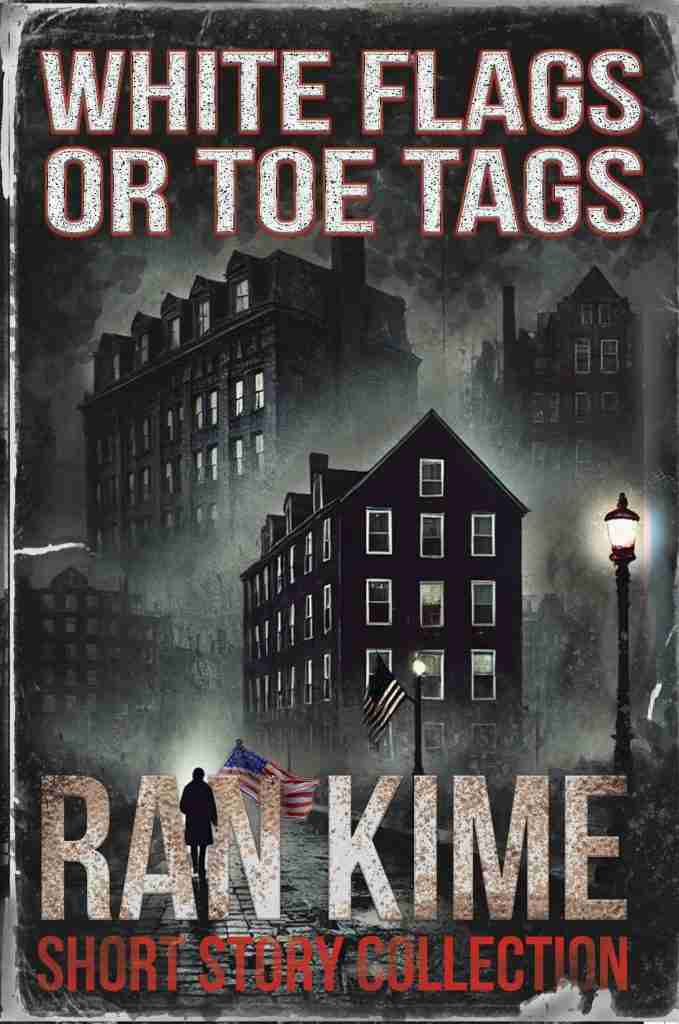
Dark psychological short story collection
- Psychological noir short stories rooted in survival and moral ambiguity
- Characters pushed to the edge of loyalty, violence, and self-destruction
- For readers who crave unflinching literary fiction without clean endings
A collection of dark psychological short fiction focused on endurance, moral fatigue, and the damage that accumulates when survival replaces hope. These stories follow characters navigating addiction, grief, inherited silence, and the quiet consequences of past decisions.
The pieces move nonlinearly, allowing memory and perception to distort reality. This is fiction about negotiating damage rather than escaping it — and living with what remains.
Paperback · 6×9 · 104 pages · ISBN: 979-8348118822
Prefer digital? Buy eBook
“I tried to remember why I’d come. What did I need? My hands fumbled through my pockets, searching for a breadcrumb of purpose. Empty. The middle console offered nothing but old receipts and baby cake napkins until my fingers landed on a for- gotten lottery ticket—a crumpled promise of nothing.”
Books by Ran Kime