Jesus on the Paddles
Not because of death, but because of love.
Mom’s driveway.
I’m certain of it.
In fact, I know it. I would bet on it. Different appearance, but right place. It’s the smell—mom’s house, from when I was growing up. A quick rainstorm, followed by sunlight warming the pavement. The vapors rise from the cracks, dancing in the air.
My little ones are running circles around me, laughing, chasing each other like they always do. Releasing their energy before a long ride. I say my goodbyes to my grandparents, then bend down to kiss my daughter’s head, followed by my son’s. I send them off with their great-grandparents—my mom’s parents. To where? I don’t know exactly. It didn’t seem important at the time. But deep down, I knew it was for something fun, just like the trips I took with them when I was their age.

Why didn’t I go with them? I’m not sure. Maybe it was work, or perhaps they wanted that alone time with their great-grandkids. It felt like one of those bonding vacations, the kind you take to stay close to family. I was certain they’d enjoy it.
Standing at the end of the driveway, watching them pull away, my mom brushed her hand down my arm, silently acknowledging the unease I felt watching my kids leave. But we both knew they were in expert hands with Nanna and Pap. She turned back toward the house, probably to start on dinner for everyone.
Pap’s RV was like an old milk carton on wheels, big and bulky, that familiar old-school cream-yellow. I watched them drive off, wanting to see the RV until it disappeared from sight. My daughter popped up in the back window, sliding the curtain to the side, and of course, my son pushed her aside to wave, the way he always does. Their waves were exaggerated, like they were swatting flies, crossing their eyes and wiggling their fingers in that goofy, comic way that never fails to make me smile.
Pap was taking it slow up the hill. I figured it was just him—old, patient, no need to rush. I admired that about him, the way he never hurried, as if he knew that the journey itself was what mattered most. But then, in a flash, I noticed something off. It looked like Pap was about to pull into the neighbor’s driveway, which made no sense. The RV swerved, clipping the curb, bouncing onto the side yard,and then — bang — hitting a massive white oak tree.
My body reacted before my mind could catch up. I ran. My brain fired off a thousand scenarios, all at once, but my feet were already moving. When I reached the RV, I wrenched the side door open, almost ripping it from its hinges. I knew the impact hadn’t been deadly—just hard enough to pop the radiator, the hiss of steam filling the air. But something was wrong, something deeper.
My children were still kneeling in the back, where they’d been waving goodbye. Stunned, but unharmed. Nanna was already unbuckling her seatbelt, reaching for Pap. He slumped over the steering wheel, clutching his chest. A heart attack?
Everything blurred. Nanna was speaking, but I couldn’t hear her. My mind had switched to survival mode, and all I could think about was getting Pap out. I unbuckled his seatbelt, pulling his limp body from under the wheel, dragging him out onto the lawn. The smell of freshly cut grass and wet pavement oddly hit me as my mind raced, trying to remember CPR steps I hadn’t thought of in years.
“Someone call an ambulance!” I yelled, though I wasn’t sure if anyone was listening or if my voice was working.
Pap looked up at me, calm. Too calm. His eyes were closing, and I slapped him—hard—to keep him conscious.
“Stay with me, Pap! Stay with me!”
Panic roared through me.
“CAN SOMEONE FUCKIN’ CALL THE AMBULANCE?”
“The kind of love we waste on stupid things, proving points that don’t matter.”
A neighbor, phone in hand, rushed over with a blanket, telling me the ambulance was already on the way. The details felt surreal. The old cordless phone, the blanket, the smell of the grass—it was all too weirdly normal for what was happening. Time slowed to a crawl.
I slapped Pap again, desperate to keep him with me. “You’re gonna be fine, Pap. Stay with me. We’ll go fishing next weekend, I promise.”
Out of nowhere, someone stepped in beside me, calm and composed, and started chest compressions. His presence, his calm, washed over me, and I let go of the panic. I kept talking to Pap, trying to keep his brain engaged, to keep him here with me.
Then I looked up, and something shifted. The man giving compressions… chills ran down my spine. I couldn’t breathe. It wasn’t my neighbor—it couldn’t be. I blinked, trying to make sense of it, but no amount of blinking changed what I was seeing.
“Jesus?” I whispered, my voice barely audible.
The man didn’t stop, didn’t look at me. He just kept pressing on Pap’s chest.
“What can I do?” I asked.
Without looking up, he said, “Pray.”
I don’t pray, not really. Not unless I’m desperate, and that’s never felt right to me.
“Are you here to save my Papaw?” My voice cracked.
He didn’t answer right away. He kept working, then looked at me, calm as ever. “It’s inside you. It always has been. It’s okay to let go. Let go and let me in. You’ll see. Just pray. Not for him, but for all of us. I’ll take him today, but he will live on. True life is beyond this.”
A soft, white light began to glow around him, first dim, then pulsing brighter, purple and blue hues swirling in the air. Pap sighed, like he was sinking into his favorite chair after a long, exhausting day.
I turned back to him, talking to him again, trying to keep him alert, but I knew. He was gone. I looked back to the man—no, not the man—to Jesus, working over Pap. But it wasn’t Jesus anymore. It was Pap. He was giving chest compressions to himself, and I stood there, frozen.
“Pap?”
He didn’t look at me. He just stopped, slowly, the light fading as the sirens grew louder in the distance. Nanna kneeled beside me, one hand on Pap’s chest, the other on my arm, whispering prayers. I wanted to tell her to look, to see if she saw what I was seeing, but I couldn’t speak. I turned back again, and no one was there. The sounds returned, the smells, the heat. My thoughts came rushing back in.
I kissed Pap on the forehead. “Take care.”
I stood, remembering the kids in the RV. I hurried them back to the house, away from the scene. As we passed mom, rushing up the hill in panic, the weight of it all finally hit me. Memories of Pap flooded in—movies, moments, still frames of laughter and lessons, all at once.
Inside, I sat the kids down and explained what had happened. They had questions, but they seemed to understand. I pulled them close, and then it came. The tears came—not because of death, but because of love. The kind of love we waste on stupid things, proving points that don’t matter. The kind of love that, when shared, feels a thousand times stronger when returned.
Love is the way.

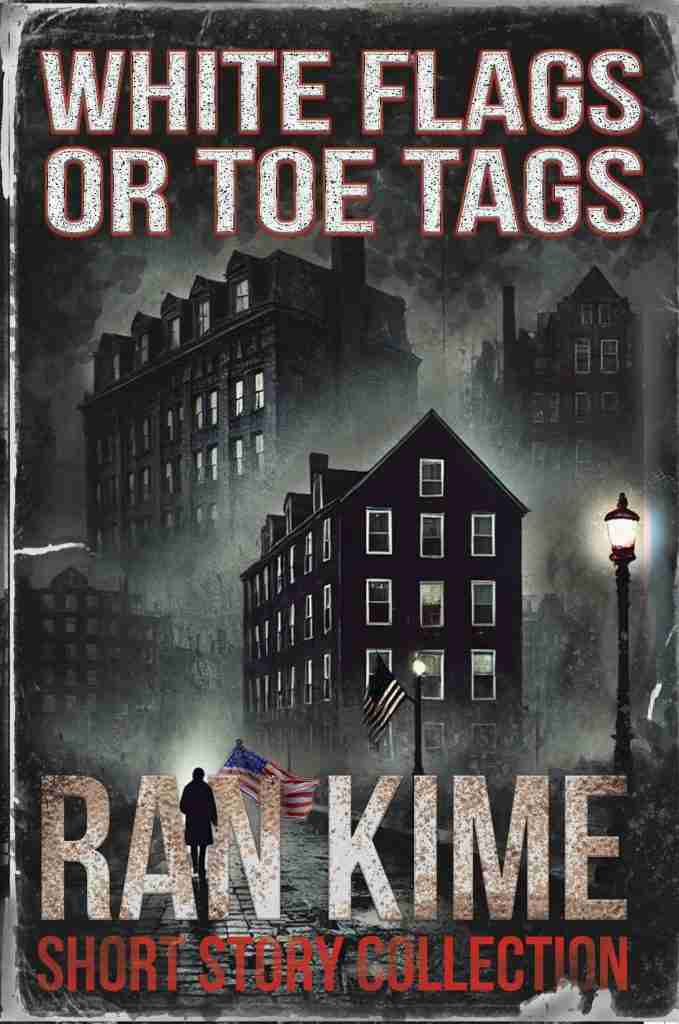
Dark psychological short story collection
- Psychological noir short stories rooted in survival and moral ambiguity
- Characters pushed to the edge of loyalty, violence, and self-destruction
- For readers who crave unflinching literary fiction without clean endings
A collection of dark psychological short fiction focused on endurance, moral fatigue, and the damage that accumulates when survival replaces hope. These stories follow characters navigating addiction, grief, inherited silence, and the quiet consequences of past decisions.
The pieces move nonlinearly, allowing memory and perception to distort reality. This is fiction about negotiating damage rather than escaping it — and living with what remains.
Paperback · 6×9 · 104 pages · ISBN: 979-8348118822
Prefer digital? Buy eBook
“I tried to remember why I’d come. What did I need? My hands fumbled through my pockets, searching for a breadcrumb of purpose. Empty. The middle console offered nothing but old receipts and baby cake napkins until my fingers landed on a for- gotten lottery ticket—a crumpled promise of nothing.”
Books by Ran Kime