Rattlesnake Mountain
Eerie lights, campfire lore, and a night in the woods where time, perception, and choice begin to come apart.
The gravel crunched under my tires, sharp and irregular, the sound amplified by the silence of the woods—even over the rumble of my bike. The sun was gone, replaced by a blanket of gray clouds smothering the stars. I leaned into the curve of the dirt road, my Harley purring beneath me like a cat content in the lap of a drunk. I was late. Work had pinned me down, and now I was playing catch up.

The campground office came into view: a leaning shack with peeling paint and a flickering neon “OPEN” sign that was missing the “O.” “PEN,” it read. A barely functional welcome.
I killed the motor, pocketed my Ray-Bans, and swung a 100 mile tired leg off my bike. The air smelled of damp wood, distant campfires and something faintly sweet, like burnt marshmallows left too long in the fire. As I walked toward the office window to check in, I caught movement inside—a man, disheveled and shuffling, his silhouette jerking like a puppet in bad lighting.
He slid open the glass, a grin breaking across his face. “Hey there,” he said, his voice scratchy but warm. “Ah, a biker, huh? What can I do ya for?”
His hands caught my attention first—cracked, callused, the kind that belonged to someone who’d spent too much time fighting the world and not enough time winning. His hair was long, greasy, tied back with a frayed piece of twine, and his beard was patchy, like he couldn’t decide whether to grow it out or give up.
“I’m Dentry,” I said. “Here for a parking pass. My girl and her kids came up earlier. Maddy McAlister? Site 12, I think.”
“Ah, yeah,” he said, scratching the back of his neck. “Maddy. She’s real nice. Got two kids with her, right? Boy and a girl?”
“That’s the crew,” I said.
He rummaged through a stack of papers on the counter, muttering to himself. “Let’s see here… McAlister, McAlister… You sure you don’t mean Anderson?”
“Could be, I thought she had put it under my name, but perhaps it was hers. And she said she already paid.”
He paused mid-search and leaned closer to the window. “Yar the one on the bike, yeah, that’s right, she said you’d be on a bike. Ha, and here you are?”

I nodded. A smile spread across his face, wide and genuine, like he’d just found an old friend. “That’s a beaut out there. Harley, right? A Street Glide Special?”
I returned the smile despite myself. “Sure is. You know your bikes, it seems. 2021. She’s got some miles on her, though.”
“That’s the best kind,” he said, leaning back. “Hell, I had an ’89 Softail Custom back in the day. Got me into more trouble than my first wife.” He laughed, a raspy bark that filled the silence. “Hang tight. I’ll grab your pass.”
“Scott”, he said as he introduced himself during a handshake that felt more like a challenge and had the kind of personality that made you want to keep talking, even if you had somewhere else to be. He convinced me to join him out back for a toke. “It’s just weed,” he said, grinning. “Nothing to scare the squares.”
Why not? I was already running late.
The backyard was chaos. Rusted refrigerators leaned against torn couches. Broken lawn chairs circled a fire pit cobbled together from cinder blocks and bricks. Faded tarps, thinned by the sun, flapped in the breeze, their edges weighed down with bricks, buckets, and whatever else Scott had scavenged.

“Don’t mind the mess,” he said, lighting a joint and passing it to me. “Wife says it’s a work in progress. I say it’s character.”
I took a drag. Decent shit. The smoke sharp but smooth, curling into my lungs like a respite after a long highway ride. Across the river, a mountain loomed—a jagged shadow against the dusk sky. Its steep face caught my eye, and I found myself staring, the joint hanging loosely between my fingers.
“That there’s Rattlesnake Mountain,” Scott said, following my gaze.
“Hell of a name,” I said, exhaling. “Considering we are in New Hampshire.”
Scott leaned back in his chair, locking his fingers behind his head, the firelight dancing off his face. “Locals call it that, sure. Me and my wife? We call it Alien Mountain.”
I laughed, but Scott didn’t. He was dead serious.
“You’re not gonna tell me little green men live up there, are you?” I asked, passing the joint back to him.
Scott shook his head. “Not little, not green. Hell, I don’t know what they are. But I know they’re there. Lights, hums, things that don’t make sense.”
His voice took on the cadence of a campfire tale, his words punctuated by the occasional crackle of the fire at our feet.
“They show up a few times a month, always at night, between two and three in the morning. Silent as fuck. Three lights, bright as hell, moving faster than anything human. They hover, zigzag, leave trails behind like comets. And then, just like that, they’re gone.”
“You’ve seen them yourself?” I asked.
He nodded. “Me and Darlene both. At first, we thought they were helicopters—maybe military. But there’s no sound. No wind. Just this… hum in my ears. Ya know, like a sixty hertz hum of electricity” He paused, his eyes narrowing. “And the air feels… charged. Like right before a lightning storm.”
I raised an eyebrow, the weed now working into my bloodstream and right to my head. “And what do you think they’re doing up there?”
Scott shrugged, taking a long drag and holding it in. “Hell if I know. But hikers go missing sometimes. Campers, too. Not a lot, but enough to notice.”
“Maybe they just got lost.”
“Maybe,” he said, but the look in his eyes told me he didn’t believe it.

By the time I rolled into Site 12, the fire was already going. Maddy waved from her chair, a red Solo cup in hand, and the kids were busy chasing each other with sticks, their laughter cutting through the night.
“You’re late,” Maddy said as I leaned the bike onto its stand.
“You’re beautiful,” I replied, stealing a kiss as she brushed by me to grab me a beer from the cooler.
The campsite was lit by a fire that had no business burning so clean. The flames licked at the air like they had something to prove. Maddy had settled in, legs crossed under her chair, looking as relaxed as I’d ever seen her. Gabe was circling the site like a dog chasing its tail, a hiking stick in his hands that he’d probably declare his most prized possession by morning. Alexi, true to form, was under a tree with her nose in a book, reading with a headlamp, ignoring the world around her.
“Why are you so late,” Maddy asked as I plopped into a folding chair next to her. My weary bones cracking in unison with the fire.
“Give me a fuckin’ break, huh,” I said, cracking open a beer.
She rolled her eyes, knowing there was more to the story, but the smile tugging at the corners of her mouth gave her buzz away. That was Maddy: fierce, unyielding, but always soft where it counted and easy as all hell to spot if she’d had even one beer.
“I hope you’re ready to do some heavy lifting,” she said, gesturing toward the tents that sagged in defeat against the backdrop of the trees. “The kids helped me set up, but…”
I looked at the sorry state of the campsite and chuckled. “Yeah, I can see that. Good effort, though.”
There’s a rhythm to setting up camp. You find the holes in the plan, patch them up, and pretend it was all part of the design. I tightened ropes, hammered stakes, and fixed the fire pit Maddy had crafted with rocks that looked chosen for aesthetics over functionality.
“You think you’re so much better at this than me,” she said, watching me with a smirk.
“I don’t think, Mads,” I said, grinning. “I know.”
The night deepened around us, the stars finally breaking through the gray. The sounds of the forest took over—crickets, the occasional rustle of leaves, the distant sound of the river. It was the kind of quiet that makes you realize how loud your head gets when there’s nothing else to distract it.
“Hey , tell a scary story!” Gabe said, his stick now poking dangerously close to the fire.
“Yeah, Dentry, scare the crap out of us like you said you would when we go camping,” Alexi added, finally looking up from her book, her headlamp shining in my eyes.

Maddy shot me a look, the kind that said Don’t you dare traumatize them.
I leaned back in my chair, took another swig of my beer, and nodded. “Alright. You want scary? I’ll give you scary.”
They all leaned in, even Maddy, though she tried to hide her excitement behind her cup.
I gestured toward the mountain behind them, its silhouette sharp and imposing against the night sky. “See that? That’s Rattlesnake Mountain. But some people around here… they call it Alien Mountain.”
Gabe’s eyes widened. Alexi sat up straighter. Even Maddy’s smirk faded into something more serious, as if she knew I was going deep on this one.
“They say it’s not just a mountain. It’s a gateway. A place where strange things happen—things that can’t be explained. Lights, low hums, people disappearing…”
“People disappearing?” Alexi said, her voice a mix of disbelief and intrigue.
“Yup,” I said, leaning closer to the fire. “You’ve never heard of this place here? This campground in New Hampshire? Really? It’s super famous for… Well, ya see, campers, hikers—people just like us—go missing. One second, they’re here, roasting marshmallows, telling stories. The next? Gone. No trace. Like they were plucked right out of existence.”
“Stop,” one mother from a neighboring site said as she approached, her voice cutting through our circle. She huddled her kids close, their eyes wide as saucers, as if they had been listening in the distance.
“You’re going to give them nightmares.” She said with a playful laugh.
“It’s just a story,” Maddy said, her tone light but laced with that protective edge she saved for moments like these. “They’ll live.”
The woman didn’t look convinced, but she didn’t argue. I assumed Maddy had already met this woman earlier that evening, because of the way she invited herself to our area, so I waited for her to settle into the chair she dragged behind her before continuing.
“They say the lights come first,” I said, my voice lower now, drawing them in. “Three of them. Bright as hell. They move in ways no human-made thing can move—faster than jets, quieter than bumblebees. And when they leave, there’s this… calm. Like the whole world’s holding its breath.”
“What about the people that go missing?” Gabe asked, his stick now an afterthought by his side.
“They come back sometimes,” I said. “But they are not the same. They talk about things—about floating, about being weightless. About time moving all wrong, like it’s broken. Some wake up with marks on their bodies, like they’ve been tagged. And some don’t wake up at all.”
Alexi shivered but tried to play it off. Gabe gripped his stick tighter.
“Of course,” I added, sitting back, letting out a loud exhale, “it’s just a made up story, or is it?”
I left the story there for them to suck on and take with them to bed. But it didn’t feel like a made-up story. Not entirely. Maybe Scott was telling me the truth. I did to them as Scott had done to me earlier. Was he fucking with me too? I believed in aliens, though perhaps less than I initially thought.

That night, I lay in the tent, staring at the fabric ceiling. The faint orange flickering glow of the dying fire cast shadows inside. Maddy was next to me, her breathing soft and steady. The kids were in the other tent, their laughter and whispers finally replaced by silence.
I should’ve been asleep, but something kept me awake. Maybe it was the story I’d told. Perhaps Scott’s voice, the look he gave when discussing lights, worked at my thoughts.
And then I heard it.
A hum, low and resonant, vibrating through the ground like a huge generator idling on the other side of the river. My chest tightened.
I unzipped the tent and stepped outside. The air was cool, the fire just embers now. Across the river, over Rattlesnake Mountain, three lights hovered. They flickered like candle flames, their movements impossibly smooth.
The hum grew louder, filling my head, my chest, my whole body. The world felt… off. Slower. Quieter.
The lights pulsed, brighter and brighter, until everything went white.
And then… nothing.

I woke up on the ground. Not in the tent. Not near the fire. Just sprawled out in the dirt, my cheek pressed against a patch of moss that smelled faintly like rain and years of piss from all the campers before me. The sun was already breaking over the horizon, its light filtering through the trees and burning straight into my eyes.
For a moment, I just lay there, trying to piece it together. The hum. The lights. The flash of white. It was all jumbled, fragments scattered in my brain like a deck of cards tossed across the floor.
When I finally sat up, my head throbbed and my arm itched like hell. I scratched at it, then froze when I saw the mark.
A red circle, no bigger than a quarter on my forearm. Faintly raised edges, almost like a burn, marked the circle, but it didn’t hurt.
“Deny!” Maddy’s voice cut through the stillness.
I turned to see her standing by the tent, arms crossed, hair disheveled from just waking, her face a mix of relief and irritation. “What the hell are you doing out here?”
I didn’t have an answer.
I brushed it off—told her I must’ve had one too many beers, wandered out for some fresh air, and fallen asleep. It wasn’t a great excuse, but it was enough to get her to drop it. For now.
The kids were already up, Gabe chasing Alexi with his prized stick, threatening to cast spells or whatever game he’d dreamed up overnight. Maddy started at frying eggs on the camp stove, her focus thankfully not on me.
I couldn’t focus. Not on breakfast, not on the kids, not on Maddy. My head felt… heavy. Not foggy, exactly. Just full. Like there was something sitting in the back of my mind, a weight I couldn’t shake.
And the mountain—Rattlesnake Mountain—seemed closer now, like it had crept forward overnight. Every time I looked at it, I felt its presence, like it was watching me, studying me.
“You gonna eat or just stare at the trees?” Maddy asked, snapping me back to the moment.
I forced a smile, looking her up and down followed by a wink. “Just admiring the view.”

It wasn’t until we were kayaking down Baker River that Maddy finally called me on it.
“Alright, what’s going on?” she asked, paddling next to me, her voice low enough that the kids wouldn’t hear.
“Nothing,” I said, though I could tell from the way her jaw tightened she wasn’t buying it.
“Deny,” she said, her paddle slicing cleanly through the water. “You’ve been weird all day. You barely ate breakfast, you’re zoning out every five seconds, and you haven’t cracked a beer or a single stupid joke since we got on the water. What’s going on?”
I hesitated, the paddle resting across the kayak. The river was calm here, the current lazy. My two hundred and eighty pound body did not do well in a kayak, especially on a river that hadn’t seen a good rain in weeks. I scraped the bottom more than floated over it. The mountain loomed on our left, its shadow stretching across the water.
“I… don’t know,” I said finally.
“That’s not an answer.”
I sighed, rubbing the back of my neck. “Last night… something happened. I don’t know how to explain it.”
“Try.”
I told her about the lights. The hum. The flash of white. Waking up outside the tent with no memory of how I got there. I didn’t tell her about the mark on my arm—not yet. That felt like a card I wasn’t ready to play.
Maddy listened, her face carefully blank, her paddle resting against the edge of her kayak. When I finished, she let out a slow breath.
“You dreamed it, or you’re believing your own ghost stories” she said.
“I don’t know,” I said. “It felt real. Too real.”
She nodded slowly; her gaze flicking toward the mountain. “Your starting to live inside your creative mind?”
“Maybe,” I admitted. “Or maybe it’s just Scott getting in my head.”
“Scott? “She said. “Who the hell is Scott?” She looked at me in a mix of puzzlement and pity, she said nothing after that, assuming I would not let her into that just yet, so she picked up her paddle and pushed forward towards the kids who were now on a rock island catching tadpoles. But I could see the worry in her eyes.

Sitting around the fire that night, the woman from the previous night entered without invitation, behaving as though we were longtime college roommates, exchanging deep dark secrets. She was jittery, her movements quick and uncertain, her daughter trailing behind her as if tethered.
“Could I talk to you?” she asked, her voice low.
I glanced at Maddy, who raised an eyebrow but said nothing.
The woman turned to her kid and murmured something, sending her off to play. Then she pulled me a few steps away, far enough that the others couldn’t hear. Her voice trembled as she leaned in. “I saw them,” she said.
“Saw what?”
“The lights,” she whispered, her hands shaking. “Last night. After your story. Three of them, just like you said. And the hum—it was so loud, I thought my head was going to explode.”
I stared at her, my throat tightening.
“I told my husband,” she continued, her words tumbling out in a rush. “But he thinks I’m crazy. Said it was just a dream, ’cause I tried to tell him your story—what you told us, the best I could. But it wasn’t a dream. I know it wasn’t.”
I wanted to tell her she wasn’t crazy. That I’d seen the same thing, felt the same hum, woken up with the same questions. But I couldn’t. Not yet. Not without unraveling the thin thread of normalcy I was barely holding onto.
“It was probably just a dream,” I said instead, forcing a casual tone I didn’t feel.
Her face fell. She stepped back, shaking her head, her expression raw and accusing. “You’re lying,” she whispered. “Of all people, I thought you would believe me.”
Before I could respond, she turned away, her daughter tugging at her hand as they walked into the dark.
Later, as the kids begged for another story, I found myself zoned out, staring into the fire, the flames twisting and flickering like they were trying to tell me something in sign language. I didn’t want to get deeper into it, but felt like I owed it to the kids to give them another night of campfire stories they would take with them later in life as a fun memory.
“Alright,” I said finally. “But don’t blame me if you can’t sleep again.”
The kids cheered, settling into their spots like little woodland creatures, eyes wide and expectant. Maddy, arms crossed, gave me a skeptical look but said nothing.
This time, the story came more easily. I told them about the lights again, but now I went deeper, like peeling back a layer I hadn’t known was there.
“To them,” I said, gesturing toward the mountain, its silhouette sharp against the night sky, “time isn’t a line. It’s a web. They can move through it, pull at it, change it. They can take it, too.”
“What do you mean, take it?” Alexi asked, her voice small, hesitant.
I leaned forward; the firelight casting shadows across my face. “I mean they can take your time. Your seconds, your minutes, your years. Trade them. Use them. To them, it’s just another resource.”
“And what do they give in return?” Maddy asked, her voice sharp, like she thought she could outmaneuver me in my own story.
I turned to her, letting the words form slowly, deliberately. “Knowledge,” I said. “About everything, about what’s out there. About why we’re here.”
The fire popped, a sudden burst that seemed to punctuate the stillness that followed. The kids sat quietly, their minds turning over what I’d said. Even Maddy, always so quick to challenge, seemed caught in the gravity of the moment.
The flames flickered, its embers glowing like the remnants of a dying star, and for just a second, I thought I saw something in the glow—something familiar, something… watching.

The circle around the fire had quieted, the kids nodding off after my deep dive into the nature of time. But the adults remained, their curiosity holding them in place. Maddy watched me intently, her gaze sharp but not unkind. Another skeptical woman, arms crossed, listened with a guarded interest. A man, I took as her curious husband had wandered over with her, a beer in hand, leaning against a tree just outside the fire’s glow, half-hidden by shadows.
“Time isn’t what we think it is,” I said, my voice steady, firm, inviting them in. “We like to believe it’s a straight line—a timeline. Birth to death, one second after the next. But that’s just how we’re wired. That’s the illusion.”
I paused, letting the fire crackle in the silence. Then I glanced at the mountain, its silhouette unwavering, a dark monolith against the stars. “But imagine if you could step back and see it all—every moment in your life, laid out at once. The good, the bad, the mundane. Not a line, but a web. Everything connected. Everything happening at the same time. That’s what time really is.”
The man cleared his throat, his voice rough but intrigued. “You saying these… lights, whatever they are, they see it all at once?”
I nodded, meeting his gaze. “To them, time isn’t something they move through. It’s something they manipulate. They can reach into it, pull on it, twist it into shapes we can’t even comprehend. They’ve evolved so far beyond us that they don’t just see time—they use it. Trade it. Harvest it.”
Maddy leaned forward, her expression sharpening. “Harvest it? For what?”
Her tone was skeptical, challenging, but I could hear the thread of unease beneath it. She wasn’t just asking for herself—she was asking for all of us and to help the others ease their mind that this was just a story and I was not a lunatic out of the ward for the weekend.
My gaze shifted from her to the others. “For them, time is a resource. Think about it—our lives are finite. Time is the one thing we can never get back, never make more of. It’s the most valuable thing we have. And to them, it’s currency.”
The skeptical woman finally broke her silence, her voice tinged with doubt. “So what? They steal our time? What’s in it for us?”
I shrugged, taking a slow sip of my beer, thinking, no wonder her husband is standing far away from her. She reeks of constant negativity. “They don’t steal it. Not exactly. They—“.
“It’s just a silly story!”, Maddy said, shooting the woman a look.
I continued, “They trade it. You give up some of your time—years, maybe decades—and in return, they give you something you can’t get anywhere else. Knowledge. Perception. Answers to questions we don’t even know how to ask yet.”
The man leaning on the tree let out a low whistle, shaking his head. “So they’re like cosmic bankers.”
“More like cosmic dealers,” I said with a dry grin. “They give you a taste of something bigger, something that changes the way you see everything. And the price? A little of your time.”
The fire popped, a single ember shooting upward before fading into the night.
Maddy’s voice cut through the moment again, sharper now. “What happens when you run out of time?”
The question hung in the air, heavy and unanswerable. Finally, I spoke, my voice quieter.
“That’s the gamble, isn’t it?” I said, my eyes fixed on the dying embers shooting into the sky. “You don’t know how much you have left. None of us do. And once it’s gone, it’s gone.”
The weight of the conversation settling over the group. The tree man took a long sip of his beer, his gaze fixed on the mountain. Maddy leaned back in her chair, her arms crossed, her lips pursed into a thin line. The skeptical woman stayed silent, her expression unreadable.
It felt as if the mountain itself was watching us, listening to the stories we told, the truths we stumbled upon, the fears we tried to bury.

The couple’s expression hovering between disbelief and reluctant interest. “Think about it,” I said, my voice insistent. “What if time was like money? Something you could trade, save, even steal? If your child was dying, wouldn’t you give up a few years of your life to save theirs? If you were dying, wouldn’t you take a few years from someone else, if it meant you could live?”
The woman’s jaw tightened, but she didn’t answer.
Her husband stood away from the tree, swirling his beer in one hand. Although his tone was lighter, he kept his eyes on me and asked, “Like putting a gun to your head and saying, ‘Hand over ten years, or else’?”
I nodded slowly, letting the thought linger. “Exactly. It’s not a perfect system. There’d be con artists, criminals—people who’d abuse it. But you’d also have people who’d give back. Parents saving their kids. Lovers giving each other time to grow old together. It’d reveal the best and worst in us, just like love does.”
Maddy leaned back in her chair, arms crossed, her skepticism cutting through the embers of the conversation. “And the aliens?” she asked again. “What do they get out of it?”
I gestured toward the mountain, as if what I was saying was meant for the mountain itself. “Perspective. To them, we’re like ants—but ants with something valuable. By trading with us, they learn how we think, how we feel, how we perceive time. They’re not just interested in what we give—they’re interested in what we are.”
“Why don’t they just show themselves?” asked a new man from a neighboring campsite. He’d wandered over at some point, an orange cherry glowing from a cigar dangling from his mouth, his face barely lit by the fire’s glow. “Why all the cloak-and-dagger bullshit?”
I laughed, short and dry, like I was blowing smoke through a fan pointed at me. “Because we’re not ready for it.”
He scoffed, rolling his eyes. “Says who?”
“Says history,” I replied, leaning forward, my elbows resting on my knees. “Ever hear of the cargo cults? During World War II, American soldiers landed on remote islands in the Pacific. These tribes had never seen anything like it—planes, guns, white men handing out candy. They thought the soldiers were gods and started worshiping them, building shrines and wicker replicas of airplanes once they left. They prayed for the gods to return with gifts.”

“Now imagine what happens when an advanced alien species shows up. Not with planes, but with technology so far beyond us, we can’t even comprehend it. Like the tribes comprehension to the planes and candy. Our entire society would collapse. Governments, religions, economies—everything we’ve built would crumble under the weight of that knowledge. That’s why they stay hidden. They’re giving us time to catch up. Scientist say humans can hear between twenty hertz and twenty kilohertz, and that we see only light wavelengths from about 380 nanometers, which is violet, to roughly 750 nanometers, which is red. A small segment of the electromagnetic spectrum known as the visible light spectrum. We see the middle of these spectrums, but there are many other colors of light and sound frequencies out there, around us right now that we cannot perceive. Maybe they can hear sections we can’t or see colors and light differently than we can and we can see and hear differently than them. What if they are sitting around us right now, but within their own spectrums of light and sound, talking to each other and perhaps, just perhaps, they know we are here but we cannot see or hear them or maybe they do not know we are here either. That is perceptive perception. Which refers to the ability to notice and understand things quickly and accurately. It involves heightened awareness and insight into one’s surroundings, emotions, and situations, allowing for a deeper understanding and interpretation. Beings with perceptive perception can often read non-verbal cues and grasp complex social dynamics effectively.”
The fire had now burned down to glowing embers, barely licking at the wood. The surrounding circle was quiet, each person lost in their own thoughts. Even the skeptical woman—her arms still crossed, but her glare softened—seemed more pensive than dismissive.
Maddy caught my eye. Her expression was unreadable, and for once, I couldn’t tell what was behind it. Did she think I’d lost it? Or was she just trying to figure out how to get me to shut up?
I lifted my head to continue, but Maddy’s look said otherwise. I wanted to incorporate the idea that spirits exist in a ghostly realm, operating on unseen wavelengths and frequencies that elude our understanding. Occasionally, these spectral realms may briefly intersect, allowing for fleeting moments of contact. Before I could rid the thought, and without warning, the memories came.
It hit me like a wave breaking over my head—lights, bright and endless, flooding every corner of my mind, from the inside out. I was weightless, floating in a space that wasn’t a space. Around me was that sixty hertz hum, not entirely a sound, but felt like a vibration that resonated in my chest, my bones, my skull.
And then the shapes. Hieroglyphics.
Beings.
Not human, but not entirely alien, either. Their forms were translucent, their movements fluid, deliberate. They didn’t speak, but I understood them.
They were showing me something. Time. Not as I knew it, but as it truly was—a web, infinite and intricate, every thread connected to every other. I could see my life—all of it, all at once. Every choice, every mistake, every moment of joy and pain, rippling through the strands like water through a screen.
And then I saw something else: a choice. A trade.
I jolted in my seat, taking a violently deep breath. Everyone snapped their heads at me. Before anyone could ask if I was alright, I faked a violent cough as if smoke got into my lungs. The memory faded as quickly as it had come, leaving me gasping, as if the wave held me under the riptide, my hands gripping the arms of the chair. The fire, the surrounding faces—they blurred, fading in and out of focus.
“Deny?” Maddy’s voice was distant, muffled, like it was coming through a wall. She lunged over at me in a panic.
I turned to her, but didn’t answer. I couldn’t. Because for the first time, I wasn’t sure if I was still here, sitting by the fire, or if I was somewhere else entirely.
I leaned forward a forced a few recovery coughs out for show and continued. “Time,” I began, “is the one universal constant we all share, yet it’s the thing we understand the least. We measure it in seconds, minutes, hours—tiny boxes we try to cram our lives into. But what if those boxes are illusions? What if time isn’t a river flowing in one direction, but an ocean we can dive into at any point, go up and down, over and under left or right diagonal or circles?”
Eyes gleamed. “Like how gravity isn’t just a force but a curvature of space-time,” the man said. “Einstein’s theory, right?”
“Exactly,” I replied. “Einstein showed us that time and space are intertwined, that massive objects—stars, black holes—warp time itself becasue of their mass. To us, time feels constant, but it’s not. It bends. It stretches.”
The skeptical mother—her name Karen, I’d learned—said, “So you’re saying these… beings, can manipulate time because they understand it better? Because they’re more advanced?”
“Think of it this way: imagine we’re two-dimensional beings living on a piece of paper. We can move forward and backward, left and right, but we can’t conceive of up or down. Now imagine a three-dimensional being—a sphere—interacting with us. To our flat perspective, it would appear as a circle, changing size without explanation because we can’t perceive that third dimension.”
I let the analogy settle, watching as the group absorbed it.

“To these beings,” I motioned to Rattlesnake Mountain and continued, “time is like that third dimension. They can move through it in ways we can’t comprehend. They can see the entire system while we’re stuck looking at just one thread.”
“But why trade time with us? What’s the point?”, Maddy asked.
“Perspective perception,” I said again. “Empathy, maybe. By experiencing our perception of time, they gain insight into a dimension they might have evolved beyond. And by offering us glimpses of their understanding, they challenge us to grow, to expand our minds.”
I paused, my eyes drifting to the embers. “Earth,” I said, “is Level sixty two.”
“Here we go,” groaned one dad, scooping up a sleeping kid from his lap. “I can’t keep up with this shit.”
The group laughed nervously, but a voice from the darkness—the man standing just outside the fire’s glow—spoke up. “Level sixty two?” he asked, his tone curious, challenging.
“Yeah,” I said, leaning forward. “Earth is one of many levels for the soul. The journey starts at Level zero, immature and unformed. It learns lessons, over and over, through countless lifetimes, until it masters the levels. Only then can it ascend.”
The groups’ skepticism mingling with intrigue. They found themselves trying to work out the concepts, whether or not they’d admit it.
“The beings we’re talking about—the aliens—they didn’t evolve the same way we did. They didn’t go through these levels, they didn’t have to wrestle with time the way we do. So they’re fascinated by how it works on a nonphysical soul, on a physical mind, on a physical body.”
“For Christ’s sake, Dentry,” Maddy muttered, “Let us breathe.”
Karen sat on the edge of her chair now, her blanket pulled tight around her shoulders like armor. “But it sounds dangerous,” she said, her voice laced with skepticism. “Messing with time, trading years of your life—it could destroy everything. Society, the way we live, everything.”
“Perhaps,” I acknowledged, nodding. “But think of the potential for good. If we could share time, give it to those who need it most, wouldn’t that foster a deeper sense of community? Imagine a world where the terminally ill could receive time from volunteers, where the elderly could gift time to the young so they could thrive or a family can saved their loved on dying on the kitchen floor, each one of them absolutely ready to trade just a piece of time for them to stay around a while longer.”
One of the men chuckled, shaking his head. “Or where the rich hoard time like they hoard everything else.”
I shrugged. “That’s the risk. Time could become the ultimate currency—hoarded, stolen, traded. It could bring out the worst in humanity. Or the best.”
Maddy leaned forward, her tone cutting. “But without knowing how much time we have, how can we even make those choices? It’s like playing a game without knowing the rules.”
“Exactly,” I said. “Again, that’s the catch. The uncertainty forces us to confront our values, to decide what truly matters. Would you give up a year of your life to save a stranger? Five years to save someone you love? And without knowing your own timeline, every decision becomes a leap of faith.”
Karen exhaled heavily, her posture softening. “It’s a beautiful idea,” she admitted. “Terrifying, but beautiful. I should get these kids to bed.”
She rose, gathering her children, and retreated to her tent, leaving the rest of us to sit, pondering the weight of time.
As the night deepened, the rest of the group gradually dispersed, pulled away by fatigue or the weight of the conversation. Soon, it was just Maddy and I, and the remnants of the fire. She watched me carefully, concern etched in the lines of her middle-aged face. She slid her chair next to mine, placing her soft, warm hand on top of mine. My heart fluttered. Her beauty was the kind great poets wrote about, the kind that inspired movies. Men have leaped off bridges for women like her that they could not have.
“Are you okay?” she asked softly.
I wanted to say yes, to brush it off, but the words wouldn’t come. Instead, I stared into her eyes.
“I don’t know,” I finally admitted, breaking the stare. “Something’s… changing. Inside me.”
She reached out, cupping my face. Her touch was warm, grounding. “Talk to me.”
I took a shaky breath. “I keep having these… flashes. Memories, but not my own. Or maybe they are. I can’t tell anymore. It’s like I’m seeing my life from the outside, all the moments happening at once. Past, present, future—all stacked on top of each other.”
“Like déjà vu?” she offered.
“More than that,” I said. “It’s like I’m slipping between realities. One moment I’m here, the next I’m… somewhere else. A place where time doesn’t exist the way we know it.”
She squeezed my hand. “Den, you’re scaring me. Is this ‘story’, your way of working something out? Like… therapy in disguise?”
I searched her face, hoping for understanding. “I think they did something to me. Last night—I don’t think it was a dream. I think they took me.”
Her grip tightened. “You should see a doctor.”
The next morning, the soreness in my arm was worse. The red circle had darkened, the surrounding skin inflamed. Maddy insisted we go to the nearest clinic—it was that bad.
The doctor, a middle-aged man with tired eyes and a no-nonsense demeanor, examined the mark, his brow furrowing.
“Any idea how this happened?” he asked.
I hesitated. “I thought it was a spider bite.”
He glanced at me skeptically. “Doesn’t look like any bite I’ve seen. I’m going to run a few tests.”
An hour later, he returned, holding an X-ray image. “There’s something embedded in your arm,” he said.

“What do you mean, ‘something’?”
He pointed to a small, opaque shape on the film. “It appears metallic. We’ll need to remove it.”
The procedure was uncomfortable. As the doctor made a small incision, I felt a strange sensation—it moved, shifting to avoid the scalpel.
The doctor paused, clearly unnerved but unwilling to say it out loud. “Must be muscle spasms,” he muttered, though his tone betrayed his doubt.
When he finally removed it, I felt an odd mix of relief and loss.
He held up the object with tweezers: a tiny metallic triangle, no larger than a grain of rice. It shimmered faintly under the fluorescent lights, as though vibrating.
“What is that?” Maddy whispered.
The doctor shook his head. “I’ve never seen anything like it. We’ll need to send it to a lab for analysis.”
When he placed it into a container, I felt a sudden disconnect, like a cord had been cut inside me. The room spun, and I gripped the edge of the bed to steady myself. It was happening again.
“Deny?” Maddy’s voice distant, muffled, like she was calling to me from underwater.
“I’m fine,” I managed, though I knew I wasn’t.
In the days that followed, my thoughts became consumed by time. I scribbled notes frantically, filling pages with equations, diagrams, and theories constructed with hieroglyphic shapes. Sleep became an afterthought, even though the flashbacks had stopped.
One night, Maddy found me hunched over the table, surrounded by papers. My eyes were bloodshot, my hands trembling.
“This has to stop,” she said firmly, her voice soft but resolute. “You’re scaring the kids. You’re scaring me.”
I looked up at her, barely registering her words. “Don’t you see?” I said, the desperation in my voice surprising even me. “Time isn’t linear. It’s a field—a dimension we can manipulate. If I can just understand how they do it…”
She knelt beside me, cupping my face in her hands. “Deny, you’re losing yourself.”
I pulled away. “No. I’m finding myself. I’m seeing the connections, the possibilities.”
“You’re talking about going back,” she whispered. “About changing the past.”
“Yes. If I can harness this, I can go back to when my Dad died. I can give him some of my time. He could meet his future grandchildren, see how beautiful our lives have become.”
Tears welled in her eyes. “And what would that cost you, Dentry? How much of your life would you give up?”
“I don’t care,” I said, barely audible. “If I can change things, make them better—it’s worth it.”
“What if your dad knew something about your time that you didn’t and he gave all of his remaining time for you to live and if you gave your time back to him that day, you would both be in an endless loop. Your dad died that day for you, so you could grow into a man and have all this.” Waving her hand, presenting our warm home.
The flashes slowly worked back in, but this time they were different—more vivid, more consuming. They weren’t memories. They were something else. Visions, premonitions maybe. Realities that seemed just as real as this one.
In one flash, I stood at my father’s bedside, holding his hand as his eyes fluttered open and closed. “You did it,” he whispered with a labored soft breath, his voice full of awe.
In another flash, I watched my life unravel—birthdays missed, moments with Maddy, and the kids traded away. Years siphoned off, leaving an empty shadow of what could have been.
I started questioning what was real. Was I here, now, with my family? Or was I lost somewhere in the web of time, untethered and drifting?
Maddy confronted me in the kitchen the following morning, her face pale yet determined. “I made an appointment,” she said. “You need help.”
“I’m fine,” I insisted, though the words felt as hollow as I did.
She shook her head. “You’re not. You’re disappearing before my eyes.”
I slammed my hand on the table, my frustration boiling over. “You don’t understand! I’m on the verge of something incredible!”
“What about us?” she cried. “What about our future? My kids becoming yours—us having children? Are we worth nothing compared to this obsession?”
Her words hit me like a punch, knocking the wind out of my arguments. “Of course you are,” I said, my voice breaking. “You’re my everything.”
“Then let it go,” she pleaded, her voice firm. “Come back to us.”
I wanted to. Desperately. But I felt caught in the pull of something bigger than myself, a force I didn’t know how to resist.

That night, alone in the house’s quiet, I stared at the clock on the wall, watching the seconds tick by. Each one felt mocking, a relentless reminder of the irreplaceable time slipping away as I sat doing nothing.
I closed my eyes and imagined the hum until I summed it. It returned on command—a low, resonant vibration deep within me. And then, clarity.
The beings had taken nothing from me. They’d offered me a choice. The ability to see time as they did, to step outside its constraints. Along with that knowledge, there came both responsibility and sacrifice.
I saw the branching paths of my life—the one where I gave up years to save my father, altering the course of my family’s future. Like me, he traded his time to save mine, unaware of my previous trade. We were caught in a loop. Another flash was the path where I stayed, cherishing the imperfect but beautiful life I had. The one where I lost myself entirely, consumed by the pursuit of understanding.
In the end, the most profound realization was this: Time’s true value isn’t in how much we have, but in how we choose to spend it.
I returned to bed, sliding in beside Maddy. She stirred, her eyes opening sleepily.
“Deny?”
“I’m here,” I whispered, wrapping my arms around her. “I’m sorry.”
She nestled into me, her tension easing. “Are you okay?”
I pressed a kiss to her forehead, “I will be. I promise.”
As I held her, I felt the weight of my choices, but also the clarity of what mattered most. The beings had shown me possibilities, but the path was mine to choose. They had always been with me, and going to Rattlesnake mountain, brought the experience out as if something reluctantly drew me there.
I let go of the obsession in that moment, to anchor myself in the present—in the life we had built, flawed, yet real.
In the days that followed, the flashes subsided. The world felt solid again, the lines between reality and possibility firming up. I spent more time with the kids, soaking in their laughter, their stories. Maddy watched me cautiously at first, but eventually, the worry in her eyes faded.
One evening, as the sun dipped below the horizon, painting the sky in hues of gold and crimson, I sat on the porch with Maddy. She took my hand, her grip warm and reassuring.
“I’m glad you’re here, in this moment, with us,” she said.
I smiled, feeling a deep sense of peace. “Me too.”
As the first stars appeared, I could see a mirage of Rattlesnake Mountain, its silhouette steadfast in the distance. I wondered if the lights would return there for others to experience, if others would face the same choices. But I also knew that the true gift wasn’t in controlling time—it was in appreciating it.
Time is the one resource we all share, yet none of us truly possess. It’s a paradox—both infinite and fleeting. We chase it, hoard it, waste it, cherish it.
Perhaps the lesson isn’t in trying to control time, but in embracing its uncertainty. Finding meaning in the connections we make, the love we share, the moments we live fully.
If you could trade your time, would you? And more importantly, how will you choose to spend the time you have—in this moment and the next?
Quick Summary
- Rattlesnake Mountain by Ran Kime
- Setting and Atmosphere: The story begins with a late-night motorcycle ride into a camping area in the woods, establishing a moody, eerie atmosphere through detailed descriptions of the surroundings and mood.
- Campfire Legends and Local Lore: Around the campfire, characters share stories about mysterious lights and disappearances on Rattlesnake Mountain, blending local legends with supernatural elements.
- Alien and Time Theories: The narrator discusses theories about alien beings manipulating time and perception, suggesting they observe and interact with our reality in ways beyond human understanding.
- Encounters with the Unseen: After witnessing strange lights and experiencing memories from otherworldly realms, the narrator questions the nature of reality, time, and their own experiences with the unknown.
- Philosophical Reflections on Time and Existence: The story explores deep ideas about time as a web connectedness, the human perception of reality, and the possibility of advanced beings trading in the resource of time, raising existential questions.
Adjacent Realities
If this story stayed with you, you may also want The Whisper of an Inorganic Being and The Handlers and the Sherbert.
This Short Story is from:

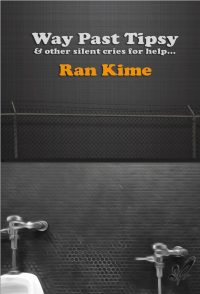
Dark psychological short story collection
- Psychological noir short stories rooted in survival and moral ambiguity
- Characters pushed to the edge of loyalty, violence, and self-destruction
- For readers who crave unflinching literary fiction without clean endings
A collection of dark psychological short fiction focused on endurance, moral fatigue, and the damage that accumulates when survival replaces hope. These stories follow characters navigating addiction, grief, inherited silence, and the quiet consequences of past decisions.
The pieces move nonlinearly, allowing memory and perception to distort reality. This is fiction about negotiating damage rather than escaping it — and living with what remains.
Paperback · 6×9 · 104 pages · ISBN: 979-8348118822
Prefer digital? Buy eBook
“I tried to remember why I’d come. What did I need? My hands fumbled through my pockets, searching for a breadcrumb of purpose. Empty. The middle console offered nothing but old receipts and baby cake napkins until my fingers landed on a for- gotten lottery ticket—a crumpled promise of nothing.”
Books by Ran Kime