Sauerkraut and Silent Agreements
Where shadows linger and belonging is questioned
The beer tasted like sauerkraut.
I let the sour foam coat my tongue, wondering why the hell I’d come all this way. The air was dense, clinging like a second skin. The woman down the bar scratched at something under her shirt. Unkempt. Unwashed. Unaware of the stale smoke hanging three feet above her like a greasy veil.
The hockey game ricocheted through the room, each slap shot echoing like a gunshot in an abandoned mine. The chatter was nonexistent, a nervous inner cacophony that failed to drown the solitude eating the place alive.
Did I want this? Or did I just want to want this?

I pulled at the sauerkraut, holding what I could down. I needed to not need this, but I needed it. I needed the warmth to take hold, to put me properly into this day.
The 50/50 raffle taped to the wall caught my eye. Rumor has it that it’s rigged. The poker machines, though, were said to pay out—at least if you could stomach losing first. Over in the corner, a cluster of whores swatted at flies that would never die.
“The world spins on these silent agreements, unspoken rules about who gets to stay and who gets shoved out the door.”
“Ya need a sponsa’,” rasped the bartender.
Her voice sounded like gravel in a garbage disposal. I leaned closer. “Sorry?”
“If ya want to drink herah’, ya need a Japanese’.”
“You just poured me a beer,” I said, confused.
She shrugged. “Ya still need one if ya wanna stay.”
My eyes roamed the room. “What about him?” I pointed to an old man hunched over a stool, his beard long enough to trip over.
“Ole Merl don’t even know where he is,” she said, chuckling, forty years of tar working loose in her chest.
“What about them?” I nodded at the cluster in the corner. One of them slapped a fly against her thigh and laughed.
“They ain’t membah’s.”
“That guy, then?” A fat man hunched over his drink, a cigarette balanced on his lip, the ash teetering an inch too long.
“He won’t sponsa’ ya.”
“Well then, what the fuck?” I muttered.
She went back to watching the hockey game, unbothered, pulling at her cigarette like her life depended on it.
I drained my kraut and tried to remember why I was here. Just as I turned to leave, the backroom door flew open. A man shuffled out—a pockmarked monument to bad decisions. Beer belly nearly to his knees. He scanned the room and locked eyes with me.
Christ.
He leaned into the bartender. They whispered, but his gaze never broke.
Then he rounded the bar, his breath preceding him like a four-day-old corpse. “Ya need a fuckin’ sponsa’.”
“For Christ’s fuckin’ sake, man, what’s with you all and this fuckin’ sponsor shit! Can ya get me a fuckin’ sponsor already?” I snapped.
He straightened, lips curling into something close to a smirk. “Listen, kid. Weze don’t want no trouble. Get a sponsa’, or get the fuck out.”
“Is that a fuckin’ threat?” I asked.
“Not yet.” His eyes glinted. “But keep talkin’, and it will be.”
The door burst open, flooding the room with a harsh beam of daylight. Everyone flinched from the bright, recoiling like vampires. I stood, pushing the sauerkraut coffin toward the bartender and tossing a ten on the bar.
“Fuck this place. I’m out.”
As I reached the door, an enormous man loomed above me, broad-shouldered and loud, his paw slapping me on the shoulder.
“Hey, there’s my fuckin’ sponsor?” I said in a facetious tone, smirking toward the bartender.
“Fuck ya, I am!” he bellowed, slapping my back hard enough to rattle my teeth. He turned toward the bar.
“Hey, he’s good people.”
Pockmark squinted. “You sure, Chuck?”
“Hell yeah,” Chuck said, throwing finger guns at the whores. They giggled like schoolgirls, swatting flies that never seemed to die.
Pockmark shrugged, the menace draining from his face, his hostility evaporating. “Well, anyone friends with Chuck is friends with us.”
The room shifted—barely noticeable, like my perception opening to some place I couldn’t see. Chuck’s hand now on the back of my neck, heavy, grounding. I looked at him, wanting petting time to be over. This towering figure who had stormed in and claimed me as his own, as though he’d been waiting all along, he belonged.
“See?” Chuck said, his voice softer now, like an uncle at a wake. “Ain’t it nice when you got someone vouchin’ for ya.”
I nodded, but something about his words gnawed at me. A part of me wanted to ask: Why does it matter? Why does belonging hinge on someone else? The world spins on these silent agreements, unspoken rules about who gets to stay and who gets shoved out the door. But what’s the point of any of it? Why do we bend ourselves into pretzels just to stay in rooms that reek of sauerkraut and regret?
But I didn’t ask. Chuck’s grip stayed firm, like he could feel the question forming, as if he knew the weight of it better than I did. Like he’d carried the same questions for so long they wore grooves in his soul.
“Funny thing,” he said, leaning close, his voice low and hoarse, “you ever think maybe it ain’t about you belongin’ to them? Maybe it’s about them belongin’ to you.”
I gave a confirming quick nod. The words wrapped around me like a riddle, unsettling in their simplicity, as if he read my mind. He clapped my back one last time and walked toward the bar, his laughter ricocheting off the walls.
The bartender poured him a drink without a word. The whores swatted another fly. The hockey game carried on, oblivious.
I stood in the doorway, sunlight stabbing through the gloom, splitting me in two: one foot in, one foot out. The din of the bar petrified in a stale haze—hockey commentary, indistinct murmurs, the occasional swat of an imaginary fly—sank to a dull hum behind me. Outside, the light was bright, blinding, almost holy.
For a moment, I hesitated, looking back, watching Chuck settle into the room like he owned it—or maybe like it owned him.
I stared at my shadow, stretched long and thin on the cracked, tired pavement. It didn’t look like me, not really. It was too tall, too sharp, too stretched out for that soul to fit into the body I carried. I thought about what Chuck said, about belonging.
Maybe none of us really fit, not all the way. Maybe we just keep searching for rooms where the edges of us don’t scrape too hard against the walls.
Or maybe the problem isn’t the rooms at all. Maybe it’s the shadows we drag in behind us, trying to shape them into something clean, something acceptable, something the room will let stay.
But shadows don’t care. They stretch where they want. They live in cracks, in corners, in places no one notices. They follow you, quiet and constant, whether you’re inside or out, sponsored or not.
The bartender’s voice floated out into the world. I glanced back. Chuck laughed at nothing, now bantering with one of the trollops. This place seemed his throne—or perhaps his cage.
I stayed on the threshold, my soul’s shadow cutting across both worlds. Maybe this was it, I thought. Life is just a series of thresholds. Of places we enter. Of places we leave. Of the weight we carry into both.
And maybe—just maybe—it’s not about belonging at all.
It’s about standing still long enough to see your shadow make finger puppets back at you in a sign language only you can decipher. Just a reminder that no matter where you go, you’re already whole.
I took a step into the sunlight, spat the stale cigarette taste from my mouth, and walked out into the stink wondering, Who the fuck is Chuck?.
My shadow pointed to the right. So to the right I went.
Right into this day that ain’t got shit on me.
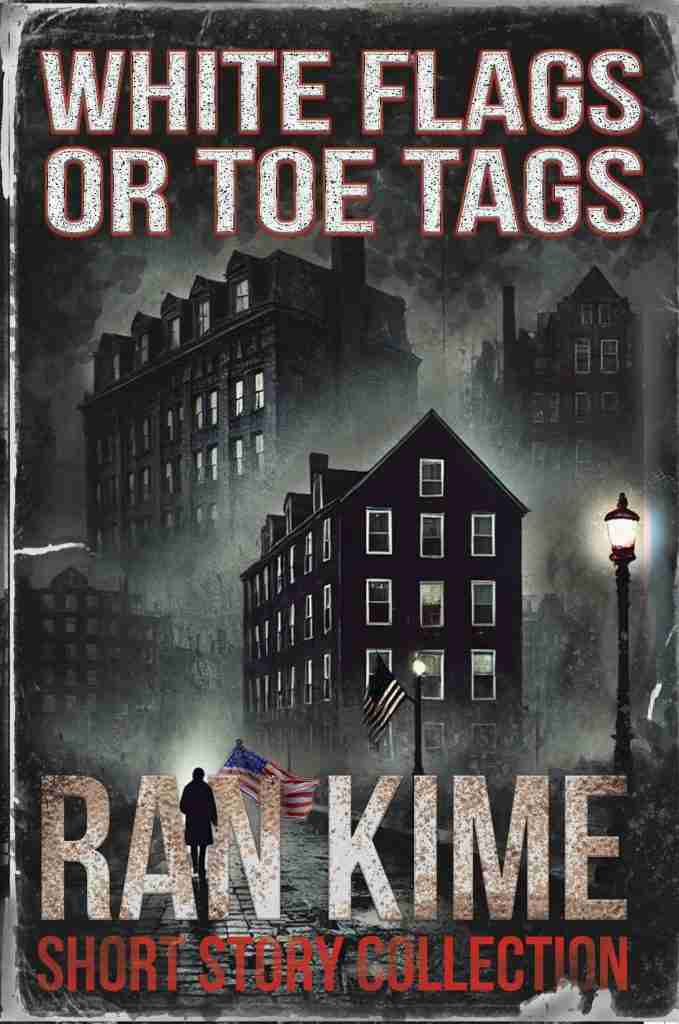
Dark psychological short story collection
- Psychological noir short stories rooted in survival and moral ambiguity
- Characters pushed to the edge of loyalty, violence, and self-destruction
- For readers who crave unflinching literary fiction without clean endings
A collection of dark psychological short fiction focused on endurance, moral fatigue, and the damage that accumulates when survival replaces hope. These stories follow characters navigating addiction, grief, inherited silence, and the quiet consequences of past decisions.
The pieces move nonlinearly, allowing memory and perception to distort reality. This is fiction about negotiating damage rather than escaping it — and living with what remains.
Paperback · 6×9 · 104 pages · ISBN: 979-8348118822
Prefer digital? Buy eBook
“I tried to remember why I’d come. What did I need? My hands fumbled through my pockets, searching for a breadcrumb of purpose. Empty. The middle console offered nothing but old receipts and baby cake napkins until my fingers landed on a for- gotten lottery ticket—a crumpled promise of nothing.”
Books by Ran Kime