The Nothing Ghosts of Winter Hill
A washed-up enforcer walks Winter Hill at dawn, haunted by the men he buried and the poet he never became.
At four in the morning, he walks Winter Hill with a hangover, a history of violence, and ghosts that refuse to stay buried.
Boston only looked good from far away.
Up close, it was a mirage you regretted catching—rotting beneath a thin layer of factitious glamour. The cracked pavement of Somerville was soaked with the mistakes of those who came before, some immortalized in books and movies, others in stains on the sidewalk.

He strolled through it daily, footsteps echoing, feeling the pulse of a city that had swallowed countless lives whole. He saw himself as a poet in denial. Maybe a street prophet, playing God for other lowlifes.
He hated the word prophet—too fancy, too clean. Deep down, he wanted to let it out—the words, the flow, the cadence of spoken word. Maybe a poetry slam on a Sunday afternoon in some dusty café.
But that would’ve been suicide. That was a secret you didn’t reveal. So he scribbled in a worn-out notebook, in bars and alleyways. Between drags of cigarettes and sips of flat beer. In a place like this, everything was broken. Even the ghosts.
He walked that curb every day, wondering if he should throw himself off the bridge into oblivion—or just keep moving, one defiant step at a time.
He remembered his old man’s words from a time when the world still had color:
“This is the best you get. Kill your darlings before the world kills them for you.” That advice had kept him alive this long, echoing through every sharp-edged encounter.
He’d killed every dream as soon as it sprouted—chopped it at the root before the city could.
One morning, he found himself in Winter Hill, near the garage—a chunk of reality he still missed.
He chuckled, looking up at the bare branches clawing over the sidewalk. The place had become an old friend, something to lean on when the rot grew too loud. Each morning, his subconscious guided him here, like guilt dragging a leash.
He thought about the people he’d put in the ground over the years—most of them starting from this very building. Winter Hill was once proper. Bustling with thugs who played both Robin Hood and Judas. But now it was his prison—a weight that grew heavier with age, his past demanding release.

The morning air was thick with dew as the wind shifted in from the harbor. A sharp twinge at the back of his neck told him Death was nearby. He didn’t believe in ghosts, but he felt them—thick on the breeze—pulling him back to memories he’d tried to bury.
“Four a.m.,” he muttered, flicking a cigarette to the curb. The embers burst like fireworks.
A fleeting reminder of another four a.m. years back—digging into the earth at a construction site while his victim clawed at the city with broken fingernails.
Back then, he felt invincible. Like he was building something. A legacy.
Now he looked back and saw only lies, deceit, and half-finished dreams collapsing under their own weight.
“Dig the well, but dig it deep,” he whispered to the empty street—a phrase he used to mock victims with as they sometimes dug their own resting place.
A faint smirk tugged at his lips, pulled along by a bottle of cheap vodka.

That morning, a thought struck him harder than it ever had before:
Maybe he’d spent so much time digging, he’d wound up in his own grave.
The city buried him daily—shovelful after shovelful.
Smothering him.
The thought stopped him cold, his worn shoes scraping the ground.
Winter Hill wrapped around him—especially the garage—silent, indifferent.
A witness to his slow descent.
“Dear diary,” he muttered, then laughed, breath sour with three-day rot.
He swayed as he spoke.
“I’m saying it now—I’M SORRY, OK? I’M FUCKING SORRY.
I lived for today to make it right—but today’s got nothing on me.
“Today’s too late.”
He fell into a bush and slid down to his knees.
Once, he believed he could save himself—find beauty in the bullshit.
But the city and the firm had other plans.
Now, he was too tired to argue with the past.
The power, the fear he once commanded—it looked good only in stories now.
Wrapped in concrete.
Myths in books and movies.
Back on his feet, passing a stray alley, he spotted something familiar—roadkill.
Guts splayed across the asphalt like a warning.
He chuckled, shaking his head. Imagined it was him—sprawled out like a poetic sacrifice to the city.
Maybe they’ll write about me someday, he thought. Just another ghost haunting Somerville beneath an unmarked grave. He knew he deserved it. A washed-up gangster’s burial.

“New Hampshire’s got my card,” he slurred, stumbling, then catching himself on a chain-link fence.
The same one he once used to string up a kid who just wanted to date his boss’s niece.
The weight of the place settled over him as he threw up on the sidewalk.
Third-day bender mixing with bile.
He could almost hear the old-timers—the ones who brought him up—muttering about how kids had lost their way.
As if they hadn’t set the path themselves.
He didn’t belong here. Not anymore.
But leaving wasn’t an option.
Winter Hill was all he knew.
A place that owed him nothing and everything at once.
His life put insomnia into his routine, booze into his liver, and anxiety into his bones.
He gritted his teeth against the bitterness of broken promises.
Dreams he once laid out for himself—before the crew brought him into a life that now kept him tethered to a hate he couldn’t shake.
As he kept walking, he thought about the words he’d never say.
The poetry buried under years of regret.
Somewhere deep in his chest, he clung to that sliver of defiance—the thing that made him spit in the face of the world, and laugh at his own resentment.
When he reached the top of Winter Hill, he paused, looking out over the city below.
It stretched on endlessly—a maze of dreams turned sour, broken by time and apathy.
But there was something about it.
A strange beauty in the decay that still called to him.
New Hampshire was calling, too. A place he could lose himself in silence.
Just a few miles north.
But he knew the truth.
You can’t outrun what’s inside.
The self-inflicted torture would follow.

And for the first time in years, he felt a strange kind of peace as the booze warmed his body.
The city had chewed him into dust.
But he’d left his mark.
A smudge on the skyline.
A whisper in the wind.
As the sun rose, casting a pale burnt glow across the rooftops, he took a deep breath.
Then threw his empty bottle into the wind, watching it shatter on the rocks below.
Today, he’d keep walking with his ghosts.
Keep writing, even if no one listened.
Keep fighting, even if it was all for nothing.
Because sometimes, nothing was all he had left.
And sometimes, nothing was all he needed.

You May Also Want to Walk Through:
If Winter Hill lingers with you, these stories press into similar territory—violence, regret, and the cost of becoming someone you never meant to be.
- Johnny Boy’s Last Run – Loyalty, betrayal, and the cost of family
- Rattlesnake Mountain – Time, regret, and the illusion of control
- The Whisper of an Inorganic Being – What waits after the last breath
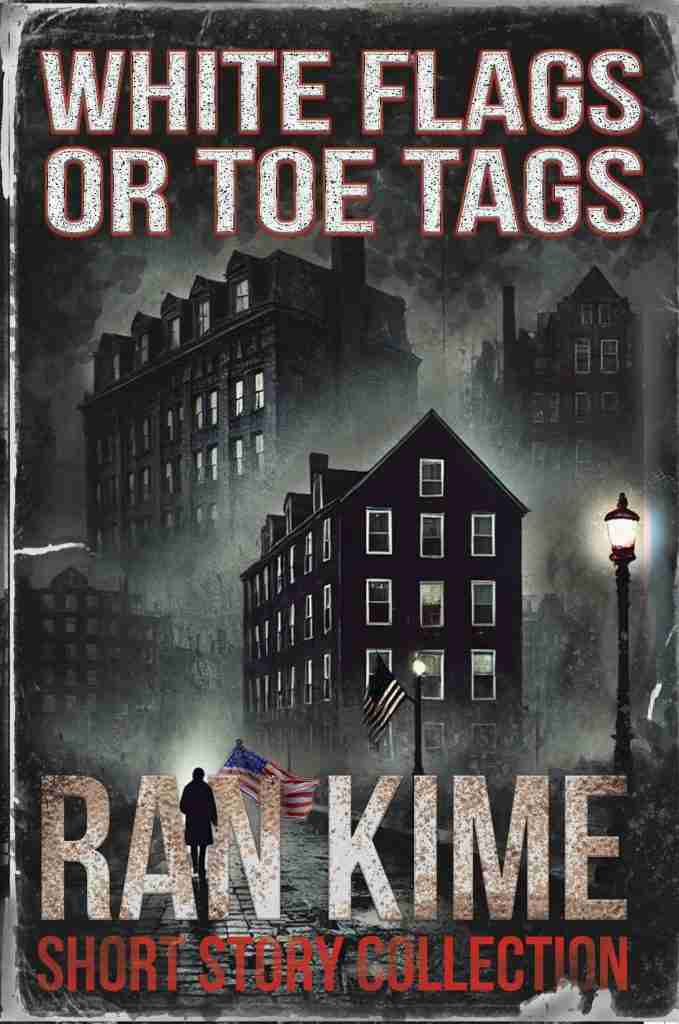
Dark psychological short story collection
- Psychological noir short stories rooted in survival and moral ambiguity
- Characters pushed to the edge of loyalty, violence, and self-destruction
- For readers who crave unflinching literary fiction without clean endings
A collection of dark psychological short fiction focused on endurance, moral fatigue, and the damage that accumulates when survival replaces hope. These stories follow characters navigating addiction, grief, inherited silence, and the quiet consequences of past decisions.
The pieces move nonlinearly, allowing memory and perception to distort reality. This is fiction about negotiating damage rather than escaping it — and living with what remains.
Paperback · 6×9 · 104 pages · ISBN: 979-8348118822
Prefer digital? Buy eBook
“I tried to remember why I’d come. What did I need? My hands fumbled through my pockets, searching for a breadcrumb of purpose. Empty. The middle console offered nothing but old receipts and baby cake napkins until my fingers landed on a for- gotten lottery ticket—a crumpled promise of nothing.”
Books by Ran Kime